

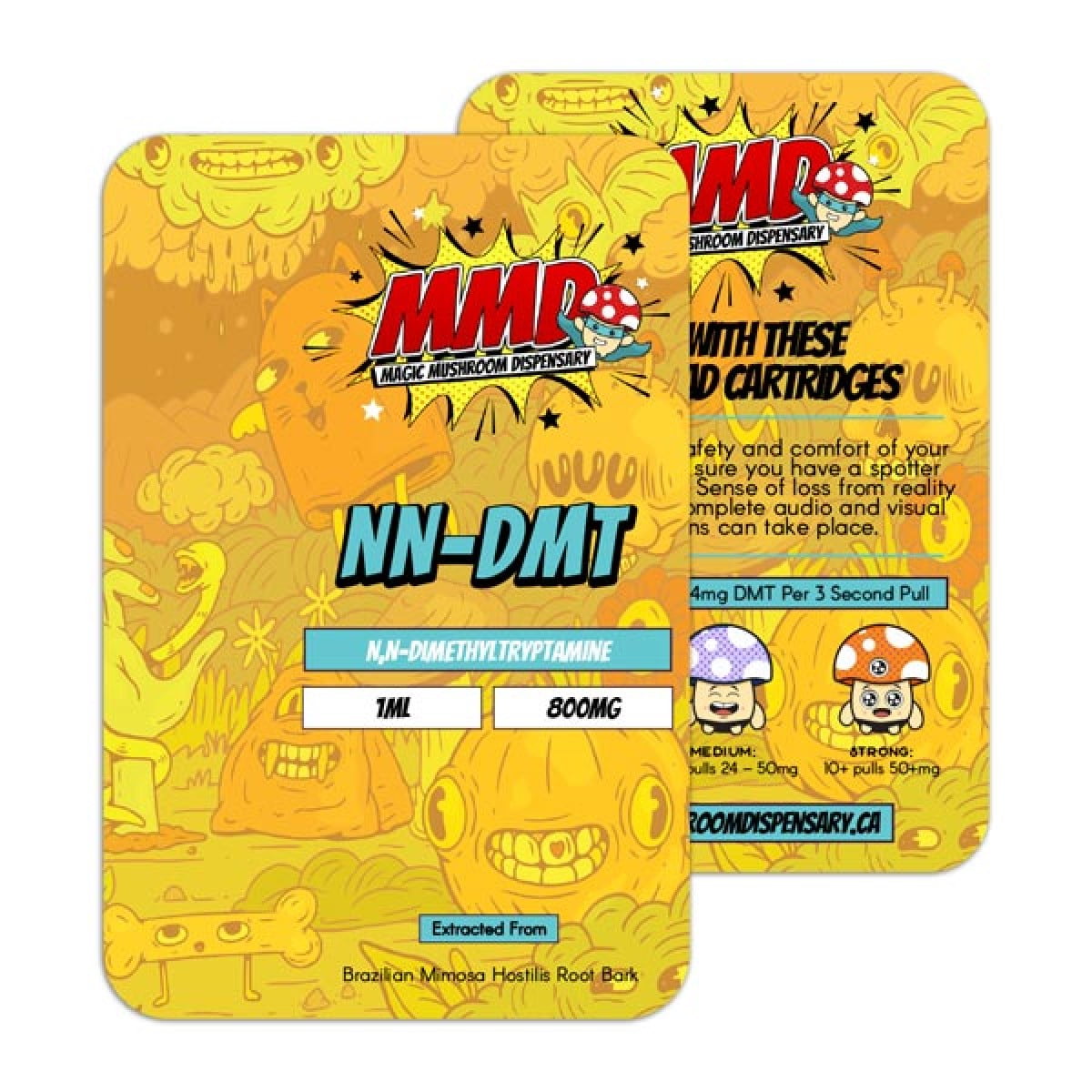
800mg – MMD Cosmo 1mL DMT Cartridge
$250.00
“Unlock the Secrets of Your Mind with MMD Cosmo’ .5mL 400mg DMT Cartridge – A Revolutionary Tool for Spiritual Exploration!”
1 mL ceramic cartridge
800mg NN-DMT
510 threaded, fits any battery/pen
Description
Description
How to Make a DMT Cart: Complete Formulation, Hardware, and Filling Guide
Introduction
Making a DMT cart at home is one of the more straightforward DIY processes in the psychedelic space — the hardware is commercially available, the chemistry is simpler than most extraction guides suggest, and the variables that actually determine quality are well understood by experienced makers. What separates a well-made DIY DMT cart from a frustrating one isn’t access to specialized equipment — it’s understanding why each step matters. Getting the carrier fluid ratio wrong, skipping the dissolution wait time, or choosing the wrong coil hardware are the three most common reasons homemade DMT carts underperform. This guide covers all of it: what you need, how to prepare the solution, how to fill the cart, and how to verify the result before your first session.
What You Need: Full Equipment and Materials List
The DMT
The starting point is freebase N,N-DMT — not DMT fumarate (the salt form). Freebase DMT dissolves in propylene glycol effectively and vaporizes efficiently at the temperatures a standard 510-thread ceramic coil produces. DMT fumarate has a higher vaporization point and dissolves less completely — it produces harsher vapor and less consistent hits in cart format and is not the appropriate form for this process.
DMT is extracted most commonly from the root bark of Mimosa hostilis (also known as Mimosa tenuiflora) using acid-base extraction, straight-to-base extraction, or solvent extraction methods. The extracted freebase compound should be white to pale yellow crystalline powder— darker or orange-tinted extract indicates impurities that will affect both the flavor and potency of the finished cart.
Carrier Fluid
The carrier fluid is what keeps DMT in solution, delivers it to the coil, and controls viscosity. Two options:
-
Propylene Glycol (PG) — the primary carrier. DMT dissolves far more readily in PG than in VG. PG produces a thinner solution with a more pronounced throat hit and better compound distribution across the fill volume. For a standard cart, PG-forward ratios (60–80% PG) are optimal
-
Vegetable Glycerin (VG) — thicker, produces more visible vapor clouds, and is gentler on the throat. However, high-VG solutions result in uneven DMT distribution — early pulls are weaker while later pulls can be unexpectedly strong as settled compound is reached. VG should constitute no more than 20–40% of the carrier blend for DMT carts
Some makers use PEG 400 (polyethylene glycol 400) as an alternative to PG/VG blends. PEG 400 dissolves DMT effectively and produces less visible vapor — useful for discretion — but PEG’s long-term inhalation profile is less studied than PG/VG. Experienced makers tend toward PG-dominant blends for the better-understood safety profile.
Avoid: Vitamin E acetate, MCT oil, and any lipid-based carrier. These are associated with lipoid pneumonia when inhaled and have no role in a properly made DMT cart regardless of their prevalence in THC cart formulations.
Hardware
Empty 510-thread vape cartridges — available commercially from vape hardware suppliers in clear glass or PCTG plastic bodies. Key specifications:
-
Ceramic coil — non-negotiable for DMT carts. Ceramic distributes heat evenly and doesn’t impart organic flavor notes the way cotton wicks do. Ceramic coil carts are widely available and clearly labeled as such
-
Glass chamber — preferred over plastic for chemical inertness. PCTG is functional but glass is the better long-term storage material
-
0.5mL or 1mL capacity — choose based on your intended fill quantity. 0.5mL carts are simpler to fill precisely; 1mL carts offer more total sessions per fill
Compatible 510-thread battery — variable-voltage, with a range that reaches down to 2.4V. This is the most critical hardware variable outside the cart itself. Fixed-voltage batteries defaulting to 3.3–3.7V run too hot for DMT, burning rather than vaporizing the solution.
Additional tools:
-
Small glass vial or shot glass for mixing
-
Glass syringe or blunt-tip needle syringe for filling (1mL capacity)
-
Precision scale capable of measuring in 0.01g increments
-
Small glass stirring rod or toothpick
-
Low-temperature heat source (warm water bath, not open flame) for solution preparation
The Formulation: DMT-to-PG Ratio
This is where most DIY DMT carts succeed or fail. The ratio of DMT to carrier fluid determines the concentration per pull, the consistency across the full fill, and the harshness of the vapor.
Standard Ratio
The most consistently documented and field-tested formulation for a 510-thread ceramic coil cart is:
0.5g (500mg) freebase DMT : 0.5mL propylene glycol
This produces a 1mL total solution at approximately 500mg/mL concentration — on the higher end of market-standard and appropriate for breakthrough-level sessions. The resulting solution is slightly cloudy at room temperature but clears when gently warmed.
Adjusted Ratios by Intended Intensity
Higher concentrations produce more compound per pull but increase the risk of uneven dissolution and crystal precipitation if the solution isn’t prepared and stored correctly. For a first batch, the moderate range (250–350mg per 0.5mL PG) gives a reliable balance between potency and solution stability.
Step-by-Step: How to Make a DMT Cart
Step 1 — Weigh Your DMT
Using a precision scale accurate to 0.01g, weigh out your target quantity of freebase DMT into a clean glass vial. Don’t estimate by eye — the potency of DMT means a 20% error in weighing translates directly to a 20% error in dose per pull. Tare the vial before adding compound.
Step 2 — Measure and Warm the PG
Measure your propylene glycol volume using a glass syringe — accuracy here matters as much as with the DMT weight. Gently warm the PG by placing the container in a warm (not boiling) water bath — approximately 40–50°C. Warm PG dissolves DMT significantly faster and more completely than room-temperature PG. Do not microwave or apply direct heat.
Step 3 — Combine and Dissolve
Add the warm PG to the DMT in the glass vial in small increments — roughly 0.1mL at a time— stirring continuously between additions. This incremental approach prevents the solution from becoming temporarily oversaturated before the compound has had time to dissolve.
The mixture will initially appear white and cloudy — this is normal. Continue stirring. As dissolution progresses, the solution will shift toward a pale yellow, semi-clear to clear appearance. At standard ratios, full dissolution typically takes 30–60 minutes at room temperature with stirring every 10–15 minutes after the initial combining.
If the solution remains milky white after 60 minutes at room temperature, apply gentle warmth (warm water bath, not above 60°C) while stirring. Persistent cloudiness after warmth application typically indicates the DMT concentration is too high for complete dissolution at that PG volume — reduce the DMT quantity or increase the PG volume slightly.
Step 4 — Rest and Confirm
Once the solution appears fully dissolved, allow it to rest for 1–2 hours at room temperature, stirring every 15–20 minutes. This rest period ensures complete dissolution rather than a temporarily clear supersaturated solution that will re-crystallize in the cart after filling. A solution that stays clear through the full rest period is ready to fill.
Color to expect: Clear to pale yellow. A solution that remains noticeably cloudy after the full rest period at room temperature may need gentle warming before filling and before each use session.
Step 5 — Fill the Cartridge
Draw the prepared DMT solution into your glass syringe. Position the empty cart upright and insert the syringe tip down the side of the cart body — along the glass wall rather than directly down the center, to avoid introducing air bubbles into the coil assembly.
Fill slowly — over 30–60 seconds for a 0.5mL fill. Rapid filling introduces air pockets and risks splashing solution into the airflow path. Leave approximately 0.5–1mm of headspace at the top of the chamber to allow for the mouthpiece seal without overflow.
Attach the mouthpiece. Wipe any solution from the threading with a clean cloth. Allow the filled cart to sit upright for 5–10 minutes before attaching to a battery — this primes the coil by allowing solution to wick fully through the ceramic element.
Step 6 — Prime and Test
Before your first psychoactive pull, prime the coil with a single very short, low-power activation — half a second — to begin warming the solution without producing a full vapor hit. This initial activation confirms the cart is functioning and the solution has reached the coil properly.
Set your battery to 2.4–2.6V for the first test pull. A correctly made DMT cart at this voltage should produce thin, barely visible vapor with the characteristic harsh, slightly medicinal DMT aroma. If no vapor is produced, increase voltage in 0.2V increments up to 2.8V maximum. No vapor at 2.8V indicates either a coil prime failure (let it sit longer) or a dissolution problem with the solution.
Optimizing Your Formula: Variables That Matter
PG/VG Ratio Adjustments
Pure-PG solutions dissolve DMT most completely and produce the most consistent hits across the full fill — but the throat hit is notably harsh. Adding 20–30% VG softens the harshness meaningfully without significantly compromising dissolution, as long as the PG fraction remains dominant. A 70% PG / 30% VG split is the field-tested sweet spot for most users balancing dissolution reliability against vapor quality.
Crystal Precipitation and Prevention
DMT solution in a cart will re-crystallize if stored in cold conditions or left in direct sunlight. The compound precipitates back out of solution as temperature drops. Warm the cart gently — held in closed hands for 30–60 seconds — before each session to re-liquefy any precipitate. A cart that has visibly crystalized inside the chamber is not ruined; gentle warming restores the solution. This is a normal property of DMT in PG at standard concentrations, not a formulation failure.
Concentration and Consistency
From hands-on maker experience, the single most common issue with homemade DMT carts is concentration too high for complete dissolution — resulting in crystal settlement at the base of the cart. Early pulls from a cart with settled crystals are weak; later pulls are dramatically stronger as the concentrated settled compound reaches the coil. If you notice this pattern, reduce the DMT-to-PG ratio in your next batch by 20–30% and extend the dissolution time before filling.
Testing Your Cart Before First Use
Testing a homemade DMT cart with a reagent test kit before use confirms the presence of DMT and the absence of substituted compounds. The Ehrlich reagent turns purple-violet in the presence of tryptamines including DMT — a positive confirmation.
Critical testing protocol:
-
Drop solution out of the cart onto a white ceramic surface or test paper — do not drop test kit reagent into the cart
-
Dropping test reagent into the cartridge can create toxic contamination of the entire fill
-
Test a single drop of solution and observe color change within 2–3 minutes
-
Purple/violet = tryptamine confirmed (consistent with DMT)
-
No color change or yellow/brown = no tryptamine detected — do not use the cart
Reagent testing doesn’t confirm concentration or purity beyond compound class — it confirms you’re working with a tryptamine-class compound rather than an unknown substitute. For concentration verification, a third-party lab test (sending a small sample to a testing service) provides quantitative results that reagent testing cannot.
Common Mistakes When Making a DMT Cart
Using DMT fumarate instead of freebase. DMT fumarate is the salt form — it has a higher vaporization point, dissolves less completely in PG, and produces significantly harsher vapor at standard cart voltages. If your DMT source is a salt rather than freebase, you need to convert it to freebase before cart preparation. The visual distinction: freebase is typically white to pale yellow crystalline powder; fumarate is often a more powdery white with a slightly different texture.
Skipping the dissolution rest period. A solution that appears clear immediately after mixing may simply be a temporarily supersaturated solution — not a fully dissolved one. Skipping the 1–2 hour rest and filling immediately often results in crystal precipitation in the cart within 24–48 hours, producing the uneven early-weak / late-strong hit pattern.
Setting battery voltage too high. Running a homemade DMT cart at 3.3–3.7V (the default range of most standard vape batteries) thermally degrades the compound before it vaporizes. The vapor becomes harsh, the effective dose per pull drops, and the cart burns through the fill faster than expected. Variable-voltage control down to 2.4V is a prerequisite for proper DIY DMT cart use — not an optional refinement.
Introducing air bubbles during filling. Rapid filling with a syringe creates micro air pockets around the coil that produce dry hits, coil damage, and inconsistent vapor production. Slow, wall-adjacent filling followed by a proper upright rest period before first use prevents this entirely.
Overfilling the cartridge. Filling above the marked capacity or leaving insufficient headspace for the mouthpiece seal results in leaking at the mouthpiece — wasting product and potentially causing the solution to contact the battery threads. Leave 0.5–1mm of headspace and seat the mouthpiece firmly.
Safety Considerations
Chemical Safety During Preparation
Freebase DMT in powder form can be absorbed through mucous membranes. Avoid inhaling during weighing — work in a ventilated area and handle the powder with care. PG is non-toxic but should be kept away from eyes. Neither component requires specialized protective equipment for small-scale preparation, but basic care is appropriate.
Solution Storage
Store filled carts and any remaining solution in a cool, dark location away from direct sunlight. UV exposure accelerates DMT oxidation — the same process that turns stored DMT crystals orange and reduces potency. A dark drawer or opaque container is sufficient; refrigeration risks condensation in the cart and is typically unnecessary for short-term storage.
Legal Context
Making a DMT cart involves handling DMT — a Schedule I controlled substance under the U.S. Controlled Substances Act. Manufacture and possession carry federal criminal exposure regardless of state. DMT extraction from plant material, solution preparation, and cart filling are all activities that fall under federal controlled substance law. Always research and understand the laws applicable in your specific jurisdiction before undertaking any aspect of this process.
Pros and Cons of Making Your Own DMT Cart
Pros:
-
Concentration control — you determine the exact mg/mL based on your intended use and experience level
-
Cost efficiency — cost of empty hardware and PG is significantly lower than equivalent pre-filled product from grey-market vendors
-
Formulation transparency — you know exactly what carrier fluid you used and at what ratio
-
Fresh compound — using freshly extracted freebase DMT produces a paler, cleaner solution than pre-filled carts of unknown age
-
No sourcing documentation risk — no grey-market transaction, no shipping interception exposure
Cons:
-
Requires access to freebase DMT — the compound itself must be sourced or extracted, carrying its own legal and practical complexity
-
No third-party quality verification — without reagent testing and ideally lab analysis, concentration is based on your own weighing accuracy
-
Technical skill required — dissolution timing, carrier ratio, and filling technique all have real failure modes
-
Legal exposure at every step — DMT possession and preparation are federally illegal in the U.S. regardless of intent
-
Re-crystallization management — homemade carts require warming before each session; pre-filled commercial carts are typically stabilized against this
FAQ
What is the best carrier fluid ratio for a DMT cart?
The most consistently reliable formulation is 70% PG / 30% VG as the carrier base, with freebase DMT dissolved at 250–500mg per mL of total solution. Pure PG provides better dissolution but harsher vapor; the 70/30 split balances dissolution reliability against vapor quality. For a first batch, err toward the lower concentration range (250–350mg/mL) while you calibrate your technique.
How long does it take for DMT to dissolve in PG?
At room temperature with regular stirring, freebase DMT typically dissolves fully in PG within 30–60 minutes. Warming the PG to 40–50°C before mixing reduces dissolution time to 10–20 minutes. Always allow an additional 1–2 hour rest period at room temperature after apparent dissolution to confirm the solution is stable before filling.
What kind of cart should I use for DMT?
Use an empty 510-thread ceramic coil cartridge with a glass chamber. Ceramic coils provide even heat distribution appropriate for DMT’s vaporization requirements. Glass chambers are chemically inert and won’t degrade the solution over storage time. Avoid cotton-wick hardware and plastic chambers for DMT-specific applications.
What voltage should I use for a homemade DMT cart?
Start at 2.4–2.6V and adjust upward in 0.2V increments if vapor production is insufficient. Maximum recommended voltage is 2.8V. Standard vape batteries that default to 3.3–3.7V are too hot for DMT — invest in a variable-voltage battery with a range that reaches down to 2.4V before filling any DMT cart.
Why is my DMT cart not producing vapor?
The two most common causes are: the coil hasn’t been fully primed (solution hasn’t wicked through the ceramic element — leave upright for an additional 10–15 minutes), or the battery voltage is too low for your specific coil resistance. Confirm voltage is set to at least 2.4V, allow additional priming time, and take one very short test activation before a full pull. If vapor still doesn’t appear, check that the cart thread connection is clean and fully seated.
Why does my DMT cart crystallize?
DMT re-crystallizes in solution at lower temperatures — this is a normal property of the compound in PG at standard concentrations, not a formulation failure. Gently warm the cart in closed hands for 30–60 seconds before each session to re-liquefy any precipitate. Storing carts at room temperature in a dark location minimizes crystallization between sessions.
Can I use DMT fumarate to make a vape cart?
Not ideally — DMT fumarate has a higher vaporization point than freebase DMT and dissolves less completely in PG. The result is harsher vapor and less consistent dosing. If your only available compound is in fumarate form, convert it to freebase before cart preparation. Using fumarate directly in a standard 510-thread cart is a common source of poor results reported by first-time DIY cart makers.
How do I test my homemade DMT cart?
Use an Ehrlich reagent test kit — drop a small amount of solution from the cart onto a test surface (never into the cart) and observe for a purple-violet color change indicating tryptamine presence. For concentration verification, send a small solution sample to a third-party testing laboratory. Reagent testing confirms compound class; lab testing confirms quantity.
Closing Thoughts
Making a DMT cart is a process that rewards patience at two specific points: the dissolution step and the rest period before filling. Rush either one and the result is a cart with settled crystals and inconsistent hit strength. Take the time to prepare freebase compound properly, use a PG-forward carrier at the right ratio, fill slowly with a glass syringe, and prime the coil before first use — and the result is a precisely dosed, consistent cart that outperforms most grey-market alternatives in formulation transparency.
For buyers who prefer not to DIY, covers documented commercial options with lab verification and stated concentrations across major brands.
Delivery Info
- Standard and Express delivery services are available for all items.
- Shipping costs are calculated at the checkout page (after delivery option & destination confirmation).
- Tracking is available for all delivery options.
- Items are delivered during standard business hours.


Reviews
There are no reviews yet.